
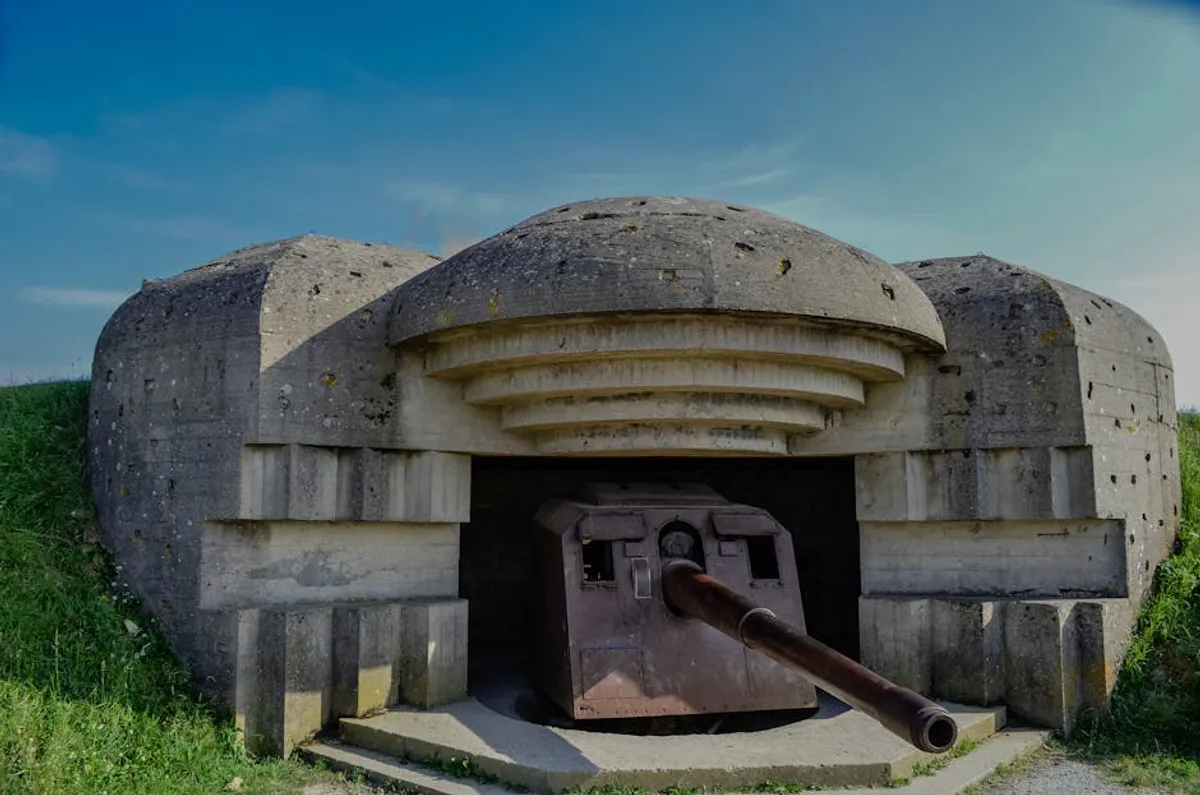
Understanding World War II pillboxes offers more than just historical insight; it provides a tangible connection to defensive strategies, engineering under duress, and local heritage. For content creators, researchers, and site managers, accurate information on these structures is crucial for developing authoritative resources, engaging educational material, or promoting niche historical tourism. These fortified positions represent a significant, often overlooked, aspect of wartime infrastructure, demanding precise identification and contextual understanding to convey their true historical and strategic value. Understanding World War II pillboxes offers more than just historical insight; it provides a tangible connection to defensive strategies, engineering under duress, and local heritage, explaining why these structures were built. For content creators, researchers, and site managers, accurate information on these structures is crucial for developing authoritative resources, engaging educational material, or promoting niche historical tourism. These fortified positions represent a significant, often overlooked, aspect of wartime infrastructure, demanding precise identification and contextual understanding to convey their true historical and
Defining World War II Pillboxes
World War II pillboxes are small, hardened field fortifications, typically constructed from reinforced concrete, brick, or stone, designed to provide defensive cover for infantry or machine gun positions. Their primary purpose was to create interlocking fields of fire, denying enemy access to strategic locations such as coastlines, airfields, bridges, and key road networks. Built rapidly and often to standardized designs, they formed integral components of larger defensive lines, particularly in Britain against the threat of German invasion during 1940-1941, and across Europe as part of various defensive perimeters.
These structures were distinguished by their robust construction, small firing apertures (loopholes), and often camouflaged appearance. Their design prioritized protection against small arms fire, artillery fragments, and light anti-tank weaponry, allowing defenders to engage advancing forces from a secure position. The strategic deployment of pillboxes reflected the tactical doctrine of static defense, aiming to channel enemy movements into pre-determined killing zones or delay their advance sufficiently for mobile reserves to counter-attack.
Key Types and Design Variations
While many pillboxes were built to bespoke local specifications, several standardized designs emerged, particularly in Britain. These designs facilitated rapid construction and ensured a degree of uniformity in defensive capabilities across different sectors.
Common British Standard Designs
- Type 22: A hexagonal structure, often with a porch entrance, providing 360-degree all-round fire. It was one of the most widely constructed types, offering good visibility and defensive coverage.
Typical Armament: Light machine guns (e.g., Bren guns).
- Type 24: A rectangular design, often with a forward-facing embrasure for a heavier weapon like an anti-tank rifle or Vickers machine gun, and flanking loopholes for light machine guns. Its elongated shape provided a wider arc of fire in a primary direction.
Typical Armament: Boys Anti-Tank Rifle, Vickers Machine Gun.
- Type 28 (Lozenge): A distinctive diamond or lozenge-shaped pillbox, designed to resist shell impacts by deflecting projectiles. Its unique geometry also offered good flanking fire.
Typical Armament: Light machine guns, occasionally heavier weapons.
- Type F.W.3 (Field Works 3): A compact, square or rectangular design, typically with three or four firing loops. These were often built into existing hedgerows or embankments for concealment.
Typical Armament: Light machine guns.
Beyond these, numerous other designs existed, including circular pillboxes, "Norcon" pillboxes (prefabricated concrete rings), and various improvised structures incorporating local materials. Identifying specific types often requires careful examination of dimensions, loophole configurations, and construction details, alongside historical documentation.
Strategic Deployment and Defensive Networks
The placement of World War II pillboxes was rarely arbitrary; it was dictated by a comprehensive defensive strategy. In Britain, following the fall of France in 1940, a vast network of "stop lines" was established. These were linear defensive barriers, often following natural obstacles like rivers or canals, reinforced with anti-tank ditches, barbed wire, and, crucially, pillboxes. The placement of World War II pillboxes was rarely arbitrary; it was dictated by a comprehensive defensive strategy, and many local history guides for Somerset detail their specific deployment. In Britain, following the fall of France in 1940, a vast network of "stop lines" was established. These were linear defensive barriers, often following natural obstacles like rivers or canals, reinforced with anti-tank ditches, barbed wire, and, crucially, pillboxes.
Pillboxes were sited to provide mutual support, with each structure covering the approaches to its neighbors, creating overlapping fields of fire. This made it extremely difficult for an attacking force to bypass or neutralize individual positions without exposing themselves to fire from adjacent pillboxes. Key strategic points such as bridges, crossroads, railway lines, and coastal landing sites received denser concentrations of these fortifications. The goal was to delay an invasion force, disrupt their logistics, and buy time for mobile reserves to engage.
Pro Tip: When researching specific pillbox types or defensive lines, cross-reference multiple historical sources, including local archives, military defense plans, and aerial reconnaissance photographs. Many structures were modified or built to non-standard designs, making accurate classification challenging without contextual evidence and understanding of the broader defensive context.
Construction Materials and Techniques
The construction of World War II pillboxes was characterized by speed, practicality, and the availability of local materials. While reinforced concrete was the preferred material for its strength and durability, brick, stone, and even earth-filled timber were used where concrete was scarce or time was critical.
Standard concrete pillboxes typically featured walls between 3 to 6 feet thick, designed to withstand direct hits from small-caliber artillery. Reinforcement usually consisted of steel rebar or salvaged metal. The construction process involved digging foundations, erecting timber formwork, and pouring concrete, often using local labor and civilian contractors. Brick-built pillboxes, while common, were generally less resistant to heavy ordnance but could be constructed more quickly with readily available materials. Earth mounding was frequently used around the base and sides of pillboxes to provide additional protection and camouflage, blending the structure into the landscape.
Internal Features and Armament
The interior of a typical pillbox was utilitarian, designed for functionality rather than comfort. Key internal features included:
- Firing Steps: Raised platforms along the firing wall, allowing defenders to operate weapons through the loopholes.
- Anti-Ricochet Walls: Internal walls or baffles designed to prevent bullets entering through loopholes from ricocheting around the interior and injuring occupants.
- Ammunition Niches: Small recesses in the walls for storing ammunition and grenades.
- Blast Walls: Internal walls near the entrance to provide additional protection against blast effects and direct fire if the entrance was compromised.
- Ventilation: Basic ventilation shafts or openings were often incorporated, though conditions inside could still be cramped and airless, especially during prolonged engagements.
Armament varied depending on the pillbox type and its strategic role. Light machine guns like the Bren were standard for all-round defense. Heavier weapons such as the Vickers machine gun or the Boys Anti-Tank Rifle were deployed in pillboxes designed for specific anti-tank or sustained fire roles. Some larger pillboxes, particularly coastal defense variants, could house anti-tank guns or even small artillery pieces.
Leveraging WWII Pillbox Knowledge for Content and Heritage
For publishers, historical societies, and content creators, detailed knowledge of World War II pillboxes offers opportunities for rich, authoritative content. Understanding their types, strategic placement, and construction can inform educational materials, virtual tours, and historical analyses. This precision elevates content beyond generic historical accounts, providing specific context that resonates with enthusiasts, researchers, and local communities. Accurate identification and interpretation of these structures contribute to local heritage preservation efforts and can serve as focal points for niche tourism, offering tangible links to wartime history.
Frequently Asked Questions
What was the primary purpose of a WWII pillbox?
The primary purpose of a WWII pillbox was to provide a hardened defensive position for infantry or machine guns, creating interlocking fields of fire to deny enemy access to strategic points and delay their advance.
How many different types of pillboxes were built during WWII?
While several standardized designs existed, particularly in Britain (e.g., Type 22, Type 24, Type 28), hundreds of variations and bespoke designs were built across different countries and regions, adapting to local conditions and available materials.
Are WWII pillboxes still standing today?
Yes, many World War II pillboxes remain standing today, particularly in areas like the United Kingdom where they formed extensive defensive networks. They are often protected as historical structures and serve as tangible reminders of wartime defenses.
What weapons were typically used in a pillbox?
Pillboxes typically housed light machine guns such as the Bren gun. Larger or strategically important pillboxes might have been equipped with heavier weapons like Vickers machine guns, Boys Anti-Tank Rifles, or even small anti-tank guns.