
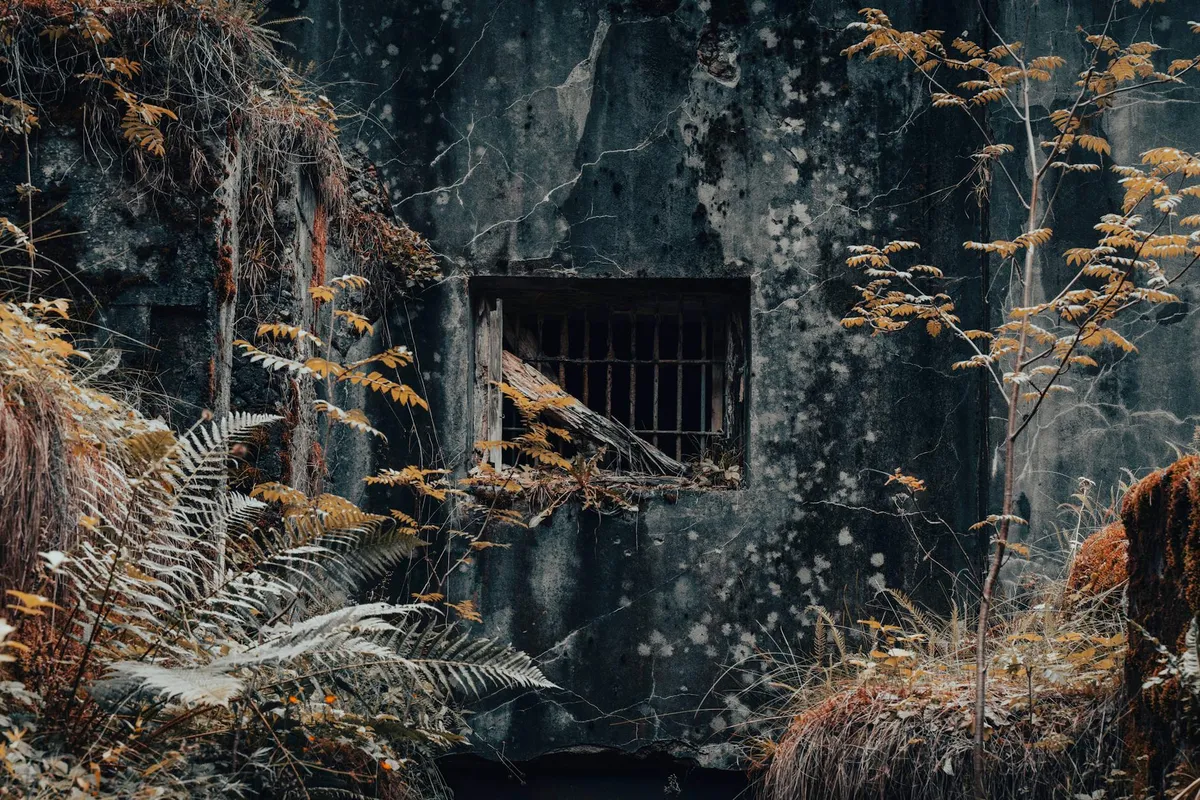
Vernacular military heritage occupies a particular cultural position in Britain. The major historical sites — the listed castles, the famous battlefields, the prominent monuments — receive sustained heritage attention. The vernacular sites — the surviving pillboxes, the local Home Guard installations, the various smaller wartime structures — receive much less attention. They are mostly outside the formal heritage protection framework. They are slowly disappearing through various processes. The question of what we should do about that deserves more serious engagement than it has typically received.
This essay considers the position of vernacular military heritage and what reasonable responses to its slow disappearance might involve.
The cultural position of vernacular military heritage
The cultural position of vernacular military heritage in Britain reflects specific historical and cultural patterns. The major military sites tend to commemorate events that occupy significant places in national memory. Battles, sieges, prominent military leaders. The vernacular sites tend to relate to less commemorated events. The 1940 invasion that did not happen. The Home Guard organisations that prepared for action they did not see. The defensive infrastructure that was built but never tested.
The cultural attention to military history naturally concentrates on events that produced dramatic outcomes. The events that did not produce dramatic outcomes — the preparations that were not tested, the defensive efforts that turned out to be unnecessary — receive correspondingly less attention.
The vernacular military heritage is the physical residue of these less-commemorated efforts. It has cultural value because it documents what was prepared, what was built, and what the country invested in during a period of acute threat. The cultural value is real even when it does not match the dramatic outcomes that draw mainstream historical attention.
The protection framework
The formal heritage protection framework in Britain operates primarily through listing, scheduling, and various protected designations. The framework has limitations in how it engages with vernacular military heritage.
Listing typically applies to structures of recognised architectural or historic significance. Most vernacular military structures do not meet the criteria for individual listing. They are too modest in their architecture, too repetitive in their design, too lacking in specific dramatic significance to attract individual protective designation.
Scheduled monument protection applies to structures of national importance. Some specific defensive structures have been scheduled. Most have not. The aggregate population of vernacular military structures is too large for the scheduling framework to address comprehensively.
Local protective designations vary in their stringency and their coverage. Some local authorities have been proactive about identifying and protecting vernacular military structures. Others have not. The variation produces uneven protection across the country.
The result is that most vernacular military structures are unprotected by formal heritage frameworks. Their preservation depends on the cooperation of landowners, the attention of voluntary heritage organisations, and various factors that are not systematically organised.
The processes of disappearance
Vernacular military structures disappear through several distinct processes that each warrant attention.
Active demolition is the most direct process. Structures are removed because their landowners want the land for other purposes. The demolition is typically lawful where the structures are not protected. The pace of demolition varies but is consistent enough across years to remove a meaningful percentage of the surviving record per decade.
Natural deterioration is gradual but cumulative. The structures were built with materials that were appropriate for their original temporary purpose. They were not designed for indefinite outdoor exposure. Frost weathering, vegetation overgrowth, soil movement, and various other natural processes gradually degrade the structures. Some have collapsed. Many are at varying stages of structural decline.
Land use change displaces structures even without active demolition. Agricultural intensification has destroyed many wartime structures that were in fields that subsequently received deep ploughing or land levelling. Urban development has destroyed others through site clearance for construction. Recreational land use change has occasionally destroyed structures through landscaping work.
Loss of identification is a subtler process. Structures that survive but are not recognised as having heritage significance can be modified, repurposed, or partially demolished in ways that destroy their heritage value without producing complete physical loss. A pillbox that has been opened up, partly demolished, and converted to agricultural storage retains some physical presence but has lost much of its interpretive value.
The aggregate effect of these processes is that the surviving population of vernacular military structures is gradually shrinking. The pace varies by region and by structure type but the trajectory is consistent.
The case for preservation
The case for preserving vernacular military heritage rests on specific grounds that warrant explicit articulation.
The structures document a specific historical effort that has cultural significance even when it did not produce dramatic outcomes. The 1940 defensive preparation was one of the largest peacetime engineering undertakings in British history. The surviving structures are the physical record of that undertaking. Documenting and preserving them preserves the physical evidence of what was done.
The structures provide educational value that documentary records alone cannot provide. Schools, universities, and general public access to physical structures supports historical understanding in ways that books and photographs cannot fully match. The educational value benefits from preservation that maintains structures in accessible condition.
The structures occupy specific places in local cultural identity. Many local communities have ongoing relationships with their surviving wartime structures. Local heritage organisations care about them. Local fieldwork groups document them. Local commemoration sometimes includes them. The local cultural value is real even when it doesn't aggregate to national-level significance.
The structures have research value that continues to develop. As historical research methods evolve, what we can learn from the surviving structures continues to develop. Preservation maintains the resource for future research that may produce understanding we cannot currently anticipate.
The case is not that every surviving structure must be preserved at any cost. The case is that systematic engagement with the question of what should be preserved, and through what mechanisms, would produce better outcomes than the current passive approach.
The mechanisms that work
Where vernacular military heritage has been preserved successfully, specific mechanisms have generally been involved.
Active landowner cooperation is the most fundamental requirement. Structures on land where the owner values the heritage are typically preserved. Structures on land where the owner is indifferent or hostile are typically lost. Cultivating positive landowner relationships is the foundational preservation work.
Local heritage organisations provide the institutional capacity that preservation requires. Volunteer groups that document structures, maintain interpretive signage, conduct visitor walks, and advocate for preservation produce sustained attention that individual landowners cannot maintain alone.
Local government support — even modest support — significantly affects preservation outcomes. Local authorities that recognise vernacular military heritage as a planning consideration, that support local heritage organisations with modest funding, and that include the heritage in local strategy produce better outcomes than authorities that ignore it.
Documentation work provides the foundation for everything else. Structures that are documented before they are lost retain analytical value even after physical loss. The documentation is the layer that survives even when the physical structures do not.
Educational engagement builds the constituency that supports preservation across time. Schools, universities, and general public engagement that draws people into active relationship with the heritage builds the support base that preservation requires.
The mechanisms that have not worked
Some approaches to vernacular military heritage preservation have been tried and have not produced sustained outcomes.
Comprehensive listing has been advocated but has not gained traction with heritage authorities. The administrative cost of listing thousands of vernacular structures exceeds what the heritage agencies have been willing to commit. The listing approach is unlikely to address the vernacular heritage challenge in the foreseeable future.
Centralised national programmes have been proposed periodically but have generally not received funding commensurate with the task. The vernacular heritage is too distributed and too local for centralised national programmes to address effectively.
Reliance on natural cultural attention has not produced systematic preservation. Public interest in military heritage is real but is concentrated on the major sites rather than on the vernacular ones. Hoping that natural cultural attention will preserve the vernacular heritage has not produced the preservation outcomes the heritage warrants.
Reliance on commercial heritage tourism has worked for a small number of vernacular sites but cannot scale to cover the broader population. The commercial tourism model requires specific site characteristics that most vernacular military structures lack.
What might actually work
The approach most likely to produce sustained preservation outcomes for vernacular military heritage involves several components working together.
Sustained local heritage organisation activity, supported through training, networking, and modest funding from heritage agencies and local authorities. The local capacity is the foundation for everything else.
Systematic documentation programmes that capture the surviving structures before further loss occurs. The documentation creates the analytical resource that survives physical loss. Serious documentation produces lasting heritage value even when preservation of the structures themselves cannot be sustained.
Selective preservation of representative examples through more formal mechanisms. Not every surviving structure can be preserved. Identifying specific structures that warrant formal preservation and applying appropriate protective designation to them protects the most important examples while accepting that others will be lost.
Educational engagement that builds constituency for the heritage across generations. The current constituency for vernacular military heritage skews older. Building younger constituencies through schools, universities, and cultural programming is essential for sustaining preservation interest across the coming decades.
Landowner cooperation programmes that provide landowners with information about the heritage value of structures on their land and with practical support for preservation when they wish to engage with it. The landowner engagement is voluntary by nature but can be supported in ways that improve outcomes.
What I think the next phase looks like
The next phase of vernacular military heritage in Britain will probably involve continued slow loss combined with continued local preservation work in specific areas.
The aggregate trajectory will be downward as the various processes of loss continue without comprehensive countervailing action. Many structures that survive today will not survive the next several decades.
The preservation that does occur will concentrate in areas where local heritage organisations are active and where landowner cooperation is available. The geographic distribution of surviving structures in fifty years will be more uneven than the current distribution.
The documentation work will become increasingly important as the structures themselves are lost. The documentation we produce now will be the heritage record that survives across the loss period.
The educational engagement will determine whether the heritage retains cultural significance across the coming generations. Current cultural engagement is sufficient to sustain some preservation work. Whether it remains sufficient depends on whether the engagement extends into younger generations.
For those of us currently engaged with this heritage, the work continues regardless of these broader trajectories. Documentation produces lasting value. Local engagement supports specific preservation outcomes. Educational engagement builds the constituency that sustains everything else. The work is its own justification even when the broader picture is challenging.
The vernacular military heritage is a particular kind of cultural inheritance. It is modest in its architecture. It is widely distributed. It is largely unprotected by formal heritage frameworks. It is slowly disappearing. The question of what we should do about it is not going to be answered by some authoritative source. It will be answered by the cumulative choices of the various actors who engage with the heritage across the coming years. Some of those choices will be mine. Some will be yours, perhaps, if you choose to engage. The aggregate outcome will be the heritage record that the next generation inherits.