
For publishers, marketers, and content strategists, understanding the precise context and significance of major national observances is critical for both ethical content creation and effective audience engagement. Remembrance Day, a solemn occasion honoring military personnel who died in the line of duty, presents a unique challenge: how to address a sensitive topic with respect, accuracy, and timely relevance. Approaching such events without a deep grasp of their historical roots, established traditions, and core meaning risks alienating audiences or, worse, misrepresenting the observance itself. This detailed overview of Remembrance Day 2026 provides the foundational knowledge necessary for informed content planning, ensuring your output is both resonant and appropriate.
Remembrance Day 2026: The Fixed Date
Remembrance Day is observed annually on November 11th. This date is fixed, marking the precise hour and day in 1918 when the armistice agreement was signed, effectively ending the First World War. For 2026, Remembrance Day will fall on a Wednesday. This consistent timing simplifies content calendar planning, allowing for pre-emptive research and content development well in advance of the observance.
While November 11th is the official date, many public ceremonies and events, particularly in Commonwealth nations, also occur on Remembrance Sunday. This is the second Sunday in November, which for 2026 will be November 8th. Content strategies should account for both dates, as public engagement and search queries often peak around both the fixed date and the Sunday observances.
The Profound Meaning Behind the Observance
The core meaning of Remembrance Day extends beyond merely recalling historical events; it is a dedicated period for national reflection and gratitude. It serves as a collective act of remembrance for the sacrifices made by armed forces members, particularly those who lost their lives in conflict. The observance emphasizes:
- Honoring Sacrifice: Acknowledging the ultimate price paid by service personnel in past and present conflicts.
- Promoting Peace: Reflecting on the devastating impact of war and advocating for future peace.
- National Unity: Bringing communities together in a shared moment of respect and contemplation.
- Educating Future Generations: Ensuring the lessons of history and the importance of remembrance are passed down.
This deep significance dictates a respectful and non-commercial approach to content. Any material published around Remembrance Day should align with these core tenets, focusing on educational, historical, or commemorative angles rather than direct promotional efforts.
Key Traditions and Observances
Several traditions define Remembrance Day, each carrying specific symbolic weight. Understanding these helps in creating contextually accurate and sensitive content:
The Two-Minute Silence
At the eleventh hour of the eleventh day of the eleventh month, a two-minute silence is observed. This tradition originated in 1919, proposed by Australian journalist Edward George Honey and adopted by King George V. The first minute is typically dedicated to the fallen, while the second minute is for the living who are left behind, often interpreted as a prayer for peace.
The Poppy Symbolism
The red poppy is the most ubiquitous symbol of Remembrance Day. Its origins trace back to the poem "In Flanders Fields" by John McCrae, which describes poppies growing on battlefields. The poppy's symbolism includes:
- Red Poppy: Represents the blood shed by soldiers and is worn as a symbol of remembrance. Funds raised from poppy sales often support veterans and their families.
- White Poppy: Worn by some as a symbol of peace, pacifism, and a commitment to non-violence, while still remembering all victims of war.
- Purple Poppy: Commemorates the animal victims of war, acknowledging the roles played by horses, dogs, and other animals in conflicts.
When incorporating poppy imagery into content, it is crucial to understand these distinctions and respect the primary association of the red poppy with veteran support and remembrance.
Ceremonies and Memorials
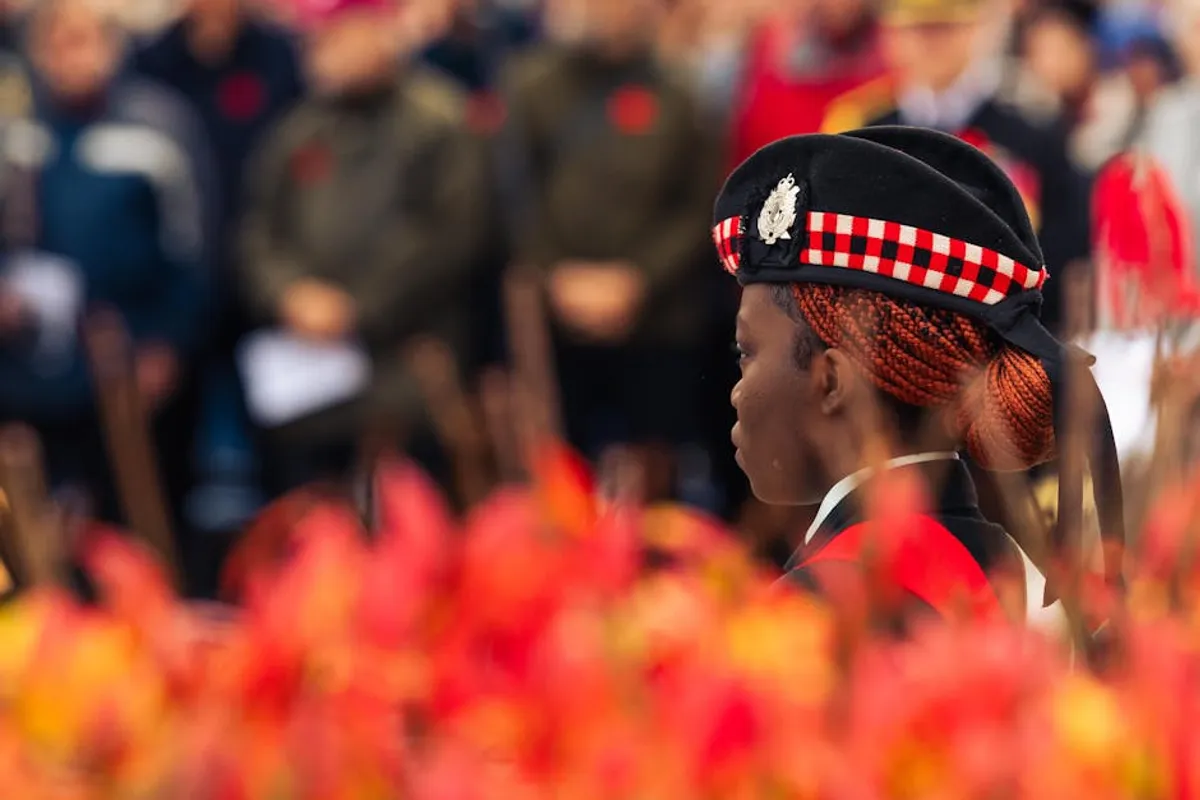
Formal ceremonies are held across the Commonwealth, with the primary national service taking place at the Cenotaph in Whitehall, London. Local communities also hold services at war memorials. These events typically involve:
- Wreath-laying by dignitaries and public figures.
- Military parades and processions.
- Readings, hymns, and prayers.
- The playing of "The Last Post" and "Reveille" by a bugler.
Content related to these ceremonies should focus on their solemnity and the collective act of national remembrance they represent.
Pro Tip: When creating content around Remembrance Day, prioritize educational and commemorative value over direct commercial gain. Search engines increasingly reward authoritative, empathetic content that respects the solemnity of such events, contributing to long-term audience trust and brand reputation. Avoid overt product promotion or sales messaging that could be perceived as exploiting the occasion.
Strategic Content Planning for Observances
For SEO professionals and content creators, integrating Remembrance Day into a content calendar requires careful consideration. The goal is to provide valuable, relevant information that respects the gravity of the day while also aligning with audience search intent.
Consider the following content angles and formats:
- Historical Deep Dives: Articles explaining the origins of Remembrance Day, specific battles, or key figures.
- Symbolism Explanations: Detailed posts on the meaning of the poppy, the two-minute silence, or specific memorial traditions.
- Educational Resources: Content aimed at explaining the significance to younger generations or those unfamiliar with the observance.
- Local Community Focus: Highlighting local ceremonies, memorials, or community initiatives related to Remembrance Day (if applicable to your audience).
- Personal Stories (with caution): If your platform features personal narratives, stories from veterans or their families can be powerful, but require extreme sensitivity and verified consent.
Keywords will often revolve around "Remembrance Day 2026," "poppy meaning," "two-minute silence," "Armistice Day history," and "Remembrance Sunday." Content should aim for informational and educational intent, building authority and trust rather than pushing a hard commercial message.
Frequently Asked Questions About Remembrance Day
When is Remembrance Day 2026?
Remembrance Day 2026 will be observed on Wednesday, November 11th. This date commemorates the end of hostilities of World War I in 1918.
What is the difference between Remembrance Day and Remembrance Sunday?
Remembrance Day is always on November 11th. Remembrance Sunday is observed on the second Sunday in November, which in 2026 falls on November 8th, and typically features the main public ceremonies.
Why do people wear poppies on Remembrance Day?
The red poppy is worn as a symbol of remembrance for military personnel who died in conflict. Its symbolism originated from the poppies that grew on the battlefields of Flanders during World War I.
What is the significance of the two-minute silence?
The two-minute silence, observed at 11 AM on November 11th, is a period of quiet reflection and respect for those who have died in service. The first minute remembers the fallen, and the second minute is dedicated to the living left behind and a hope for peace.